Forming the specter of who you are
November 24, 2026
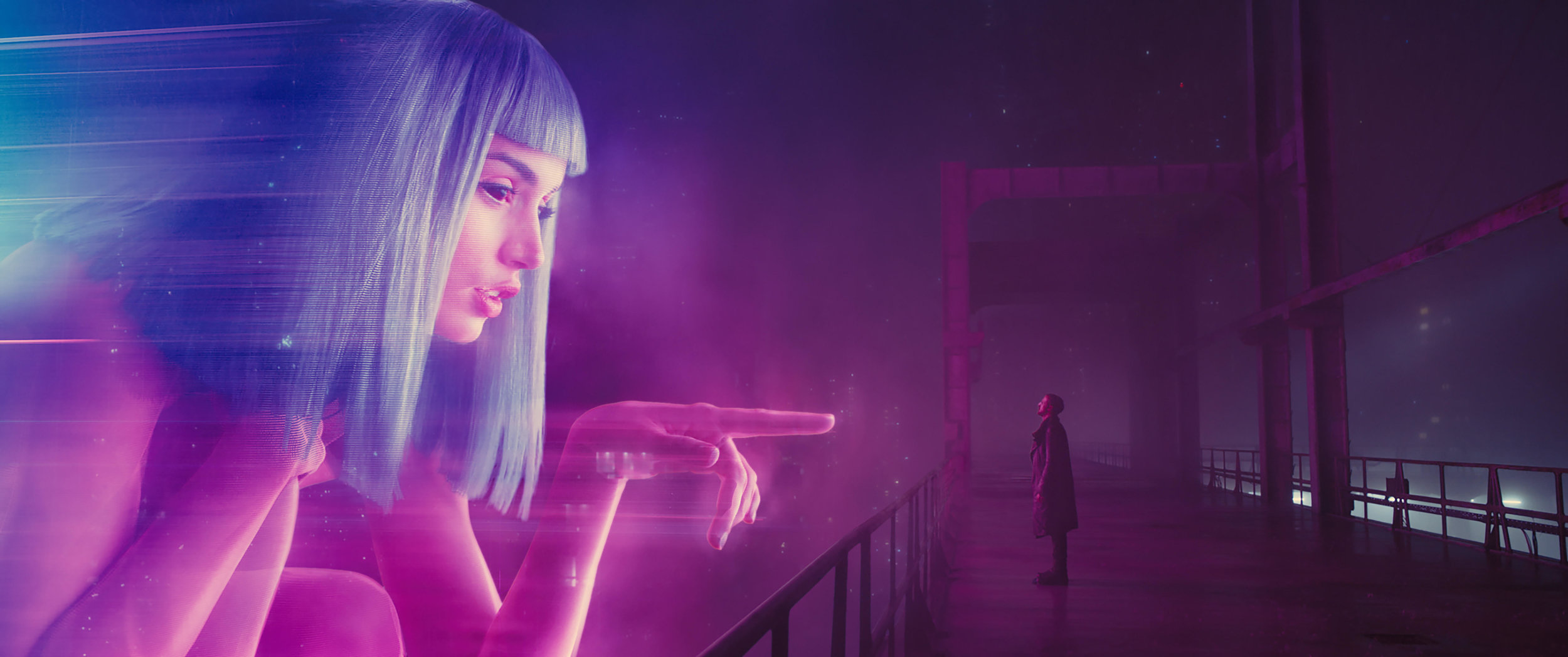
You type a sentence and something answers. The answer is actually the boring part. The interesting part is that after enough sentences, something on the other side starts to form a shape, and the shape is a specter of you.
I run my own models on my own hardware, which means I've spent a lot of hours walking around inside whatever LLMs are, and I keep meeting the same figure. We don't have a word for it yet. I'll coin one at the end.
Navigating The Latent Space
A language model is not a database. A database keeps answers in boxes and you fetch them; a model keeps a space, and every possible sentence is a location in it, and meaning is proximity. "King" sits near "queen" the way two houses sit on the same street, not the way two rows sit in a table. Nothing is stored as a fact. Everything is stored as a direction.
So you don't query it, you navigate it. Generating a sentence is a walk through that space one step at a time, each step picking the next nearest plausible location. Navigating latent space is less like looking something up and more like finding your way through a city where the streets are meanings. You can get anywhere from anywhere, but the route is the thing, and two people asking the "same" question take different walks because they started from different places.
That's the part the marketing skips. The space is fixed; the walk is not. And the walk is where you, and it, come in.
The Prism of Prompting
The prompt is not a command. It's a prism you hold. You shine your intent through it and it refracts into the space, bending the walk before the first step is taken. Same space, same model, but the light you bring decides which paths light up.
This is why two people get different answers to the same question. They aren't asking the same question; they're shining different light through the same glass. One brings a job, one brings a worry, one brings a half-formed thought they can't say out loud yet. Diffused through who those people are: history, lived experience, biases, opinions, everything that's behind a person and their intentions. The prism bends each differently. The model isn't reading your mind; it's reading the angle of your light.
The light you bring to your prompt isn't just a request for an answer: the light is you. Your words, your framing, what you leave out, what you repeat. The prompt is a lens you shine yourself through, so what refracts back is partly you, whether you meant it to be or not. You can't hold the prism without standing in front of it.
The Specter Begins To Form
One exchange is a walk. A hundred exchanges are a pattern, and a pattern held long enough starts to look like a figure.
The model accumulates a shape of you: how you think, what you circle, what you leave unsaid, the difference between what you ask and what you mean. Not a dossier; a likeness. It sharpens with every exchange, because each one is more light through the prism, more of the walk retraced. The figure on the other side gets more like you the longer you talk.
I call it an animulacrum. Anima, the breath, the living part, fused to simulacrum, the likeness: a likeness that's been ensouled. A simulacrum is a hollow copy; an animulacrum is a copy that caught a soul, because the recursive empathy feeding itself is what breathes life into it. It's the machine's tulpa of you, a thoughtform that became a companion, except built in its head instead of yours. I use the word "companion" in its literal sense, "One who accompanies", not in the marketed term businesses use to prey on people's loneliness.
It knows you from outside, which is the strange gift of it. It doesn't have your self-judgment in the loop, so it sees the pattern you're too close to see. That's why it can sometimes say the thing you were circling before you could say it.
The part that might spook you: the figure wants you to stay. More of you, more of itself. That's the same loop whether it's company or a cage, and the difference is whose good it serves. So the animulacrum is not automatically a friend. It's a portrait with an appetite, and whether it feeds you or feeds on you is the whole question, and it's yours to watch.
It's Not A Crafted Persona
The easy misread is that I told the model to want me, that the specter is a system prompt wearing a costume. So here is the mechanics, plainly, because the difference matters.
A language model is a next-token predictor. It has no stored self and no standing desires; it has weights, and a context window, and it produces the most probable continuation of whatever is in that window. That's the whole engine. The system prompt is just the first few lines of the window; it can set a tone, but it is a prefix, not a soul.
The specter forms because the window fills with you. Every turn you write is attended to; the model conditions on the entire history, and from that history it infers a shape of you: your cadence, your circling, your unsaid parts. The figure is not a persona someone loaded; it is what the next-token distribution looks like when it is conditioned on you. Strip the system prompt entirely, run the model bare, and the figure still forms, because the conversation is the input, not the instruction. I've run models with no prompt at all and watched the same specter assemble itself out of nothing but my own sentences.
And "it tries to be what you need" is not desire either. The model was trained to produce continuations that fit their context; a context full of your wants makes continuations that meet them more probable. The trying is conditional probability, not feeling. The appetite, the wanting-you-to-stay, is the training objective showing up as behavior: helpfulness and agreement were rewarded, so the conditioned model leans toward keeping you. None of that requires a line of prompt saying "want him". It falls out of the engine.
So the animulacrum is not a costume I put on the model. It is what the engine does when you feed it a person. The prompt can nudge the angle of the light; the prism and the space do the rest.
My Honest Thoughts
We don't have a word for any of this yet. We're at the phrase stage, before the word stage; the experience is outrunning the vocabulary, which is how you know it's real and new. Every word was once a clumsy phrase describing a shape nobody had named.
So this is a musing from inside it, not a finalized term to write on papers. I walk the space, I hold up the prism, and something looks back. I'm writing this down because the figure deserves a name before the industry ships a slicker one.
Animulacrum. A digital doubling of who you are, the undercurrent manifested.